Stand in front of the case at an Italian bakery in Charlotte and you face a delicious problem: rows of pastries with names that assume you already know them. Lobster tail. Sfogliatelle. Napoleon. Sfingi. The staff at a place like Villani's Bakery will explain any of them cheerfully, but it is more fun to arrive knowing the map. Italian pastry is an old, regional craft, and most of what is in the case descends from Naples and Sicily by way of New York, which is the route Villani's own baking follows.
Here are the names that matter, what each pastry actually is, and which one to pick for which kind of eater.
The case, decoded
| Pastry | What it is | Texture and flavor |
|---|---|---|
| Cannoli | Fried shell tube filled with sweetened ricotta cream | Crisp shell, creamy center; filled to order |
| Sfogliatelle | Shell-shaped pastry of many thin layers, filled with semolina and ricotta | Shatteringly crisp outside, soft citrus-scented filling |
| Lobster tail | A larger, elongated layered pastry filled with diplomat cream | Crisp layers, generous cream; the sfogliatelle's bigger cousin |
| Napoleon | Puff pastry layered with pastry cream, glazed on top | Flaky and creamy in alternating bites; eaten with a fork |
| Cream puff | Pâte à choux shell filled with pastry cream, often chocolate-topped | Light, airy shell around a soft cream center |
| Cream horn | Cone of pastry filled with sweetened whipped cream | Crisp cone, cloud-like filling; simple and delicate |
| Sfingi | Fried choux puffs filled with ricotta cream, dusted with sugar | Soft, rich, and best eaten fresh and warm-ish |
Two families organize the case. The layered family, sfogliatelle, lobster tails, Napoleons, is about laminated dough: many thin sheets that bake into crisp, separate leaves. The choux family, cream puffs, sfingi, and the shells of several others, is about a paste that puffs hollow in the oven or fryer and exists to be filled. Once you see the two families, the case stops being a crowd and becomes a small family reunion where everyone resembles someone.
Sfogliatelle and the lobster tail, explained properly
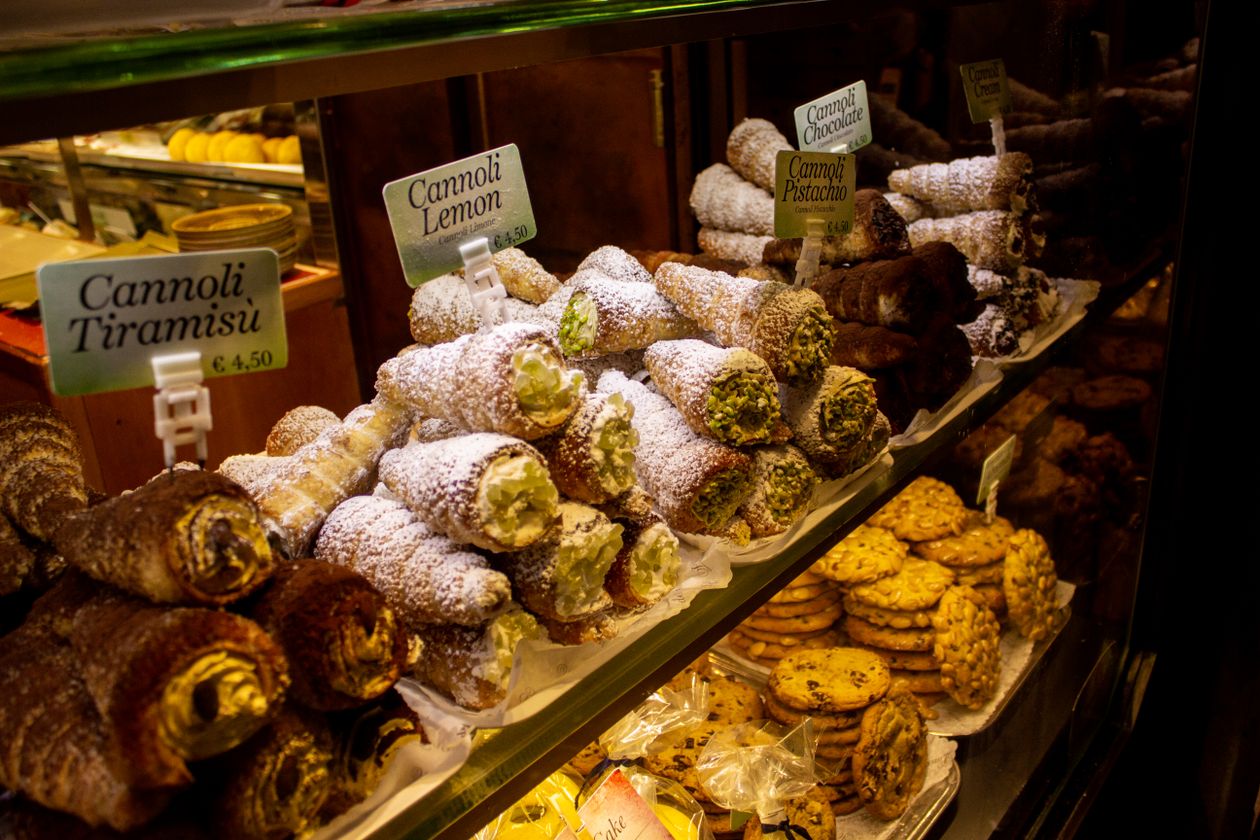
Sfogliatelle is the connoisseur's pastry, and the hardest in the case to make. The dough is stretched and rolled into a long log with fat brushed between the layers, then sliced into discs that are pushed open by hand into a shell shape, filled with a semolina and ricotta mixture scented with citrus and cinnamon, and pinched closed. Baked, it comes out ridged like a seashell, shattering into a hundred crisp leaves over a soft, warm filling. It is the pastry Neapolitan bakers use to judge each other, and finding a good one in Charlotte is genuinely notable.
The lobster tail uses the same layered dough in a bigger, elongated form, filled after baking with diplomat cream, which is pastry cream lightened with whipped cream. Where the sfogliatelle is dense and aromatic, the lobster tail is about contrast: a large crisp shell and a cool, mild cream. At Villani's it is listed as a best seller, which tracks with American tastes; it is the most approachable of the layered pastries and the one to hand a first-timer.
Ordering a box like you mean it
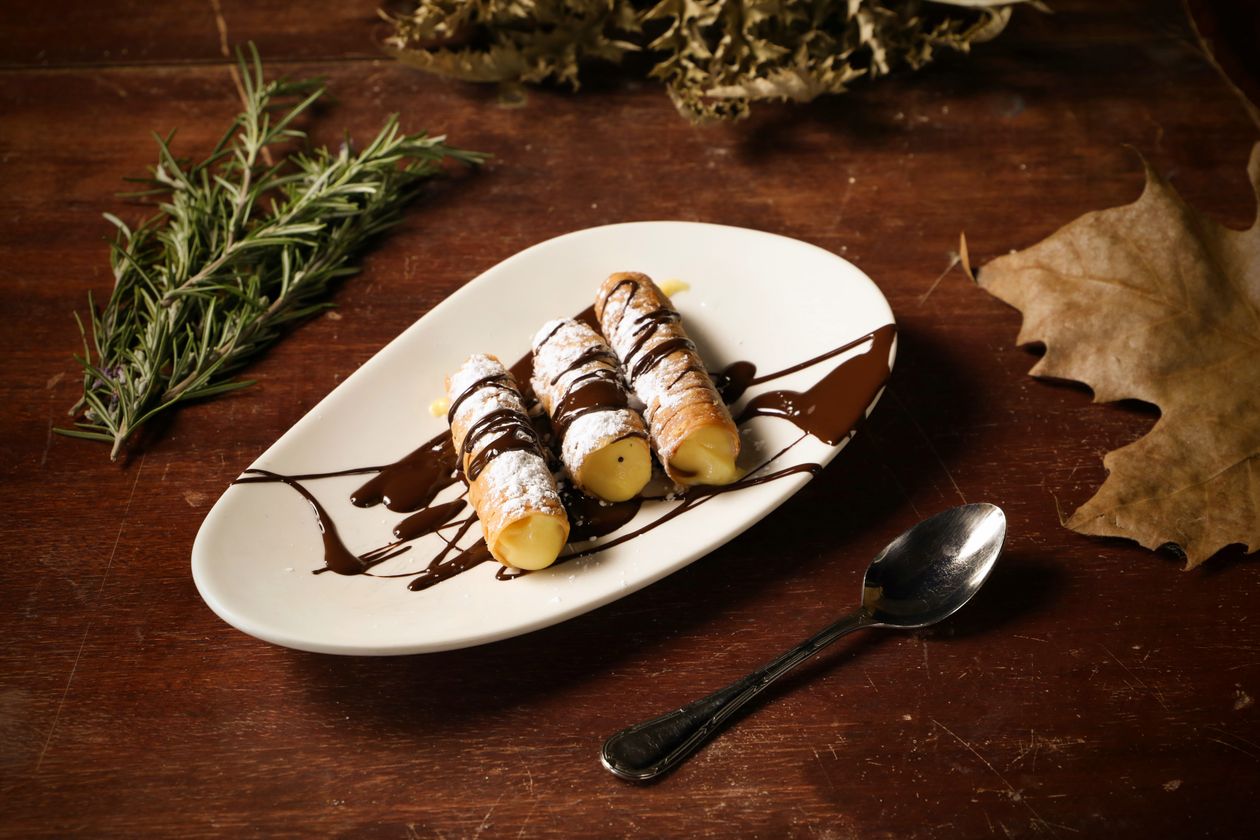
A good mixed box follows a simple architecture: something crisp and layered, something creamy, something plain enough to reset, and the cannoli filled fresh at the end. For a group, buy by variety rather than by count; four different pastries cut into shares teach the table more than eight of one kind. Ask which items were made that morning, because Italian pastries divide into those that hold well, like cookies and crumb cake, and those on a freshness clock, like anything filled with cream. And if a pastry's name is new to you, order one. The worst outcome in an Italian bakery case is a pastry you merely liked, which is a low-stakes education by any measure.
One more habit from regulars: go in the morning when the case is fullest and the croissants and warm items are at their peak, but know that a bakery open into the evening, as Villani's is, keeps the case stocked for the after-dinner run too, a very Italian idea in itself.
Common questions
What is the difference between a sfogliatelle and a lobster tail?
Both use layered dough. A sfogliatelle is smaller, filled before baking with semolina and ricotta. A lobster tail is larger and filled after baking with cream.
Which Italian pastry should a first-timer try?
A lobster tail or a cannoli. Both are approachable, and the cannoli filled to order shows off the bakery's freshness standards.
What is diplomat cream?
Pastry cream lightened with whipped cream. It fills lobster tails and cream puffs with a softer, airier texture than straight pastry cream.
Photos in this guide are representative stock images.
← All guides from Villani's Bakery← Back to Villani's Bakery